
Probash Kormi
Probash Kormi is an overseas job application and management system built for Ahmed Amin Group: a multilingual mobile app where a Bangladeshi worker signs up with their personal and professional details, filters jobs by what they actually want, applies, and gets notified as their application moves; a separate flow for agents and agencies; and an admin portal that keeps the whole ecosystem inside the regulation that governs overseas recruitment. ELO delivered it with a dedicated team. My part was not the code — it was consultancy and advocacy on the architecture and design decisions the internal teams were making, and verification of the UI/UX before it shipped.
Why the applicant side is the hard side
The user is a worker preparing to leave the country for a job, often on a phone, often in Bangla, with documents that decide whether they travel — a medical report, a trade test, a contract. Anything unclear in that flow is not a usability annoyance; it is someone's migration.
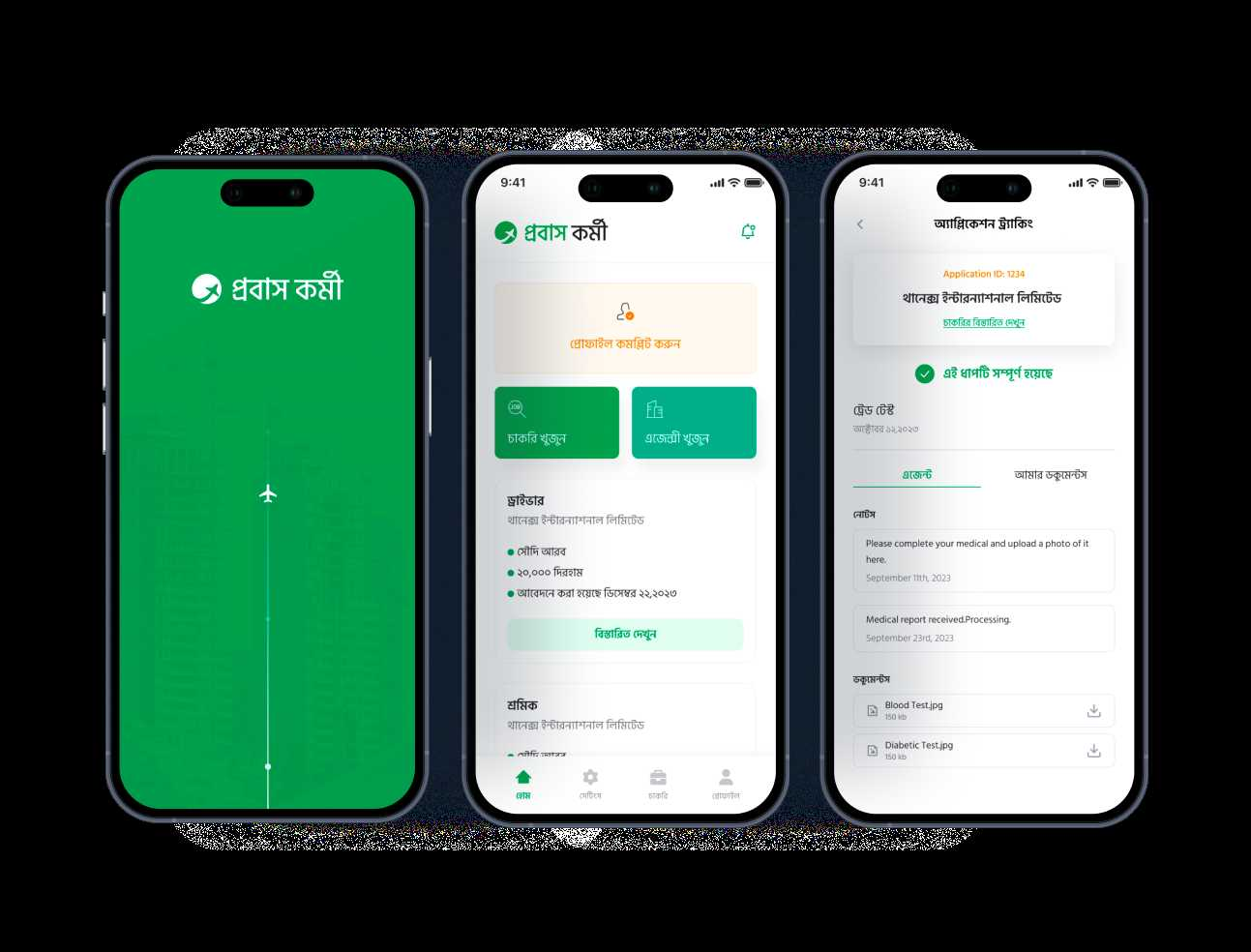
So the applicant app is Bangla-first and structured around the stages the worker is actually living through: profile completion, job search, application, and then a tracked progression with notes and documents attached at each step. The admin portal exists to keep that ecosystem compliant, because overseas recruitment is regulated on both ends.
What the platform covers
- Multilingual applicant app. Sign-up with personal and professional details, filtering by preferred job attributes, applying, and progress notifications.
- Candidate management. Admin visibility into every applicant with the ability to request corrections before a file moves.
- Application tracking. Explicit stage advancement per candidate, with notes and uploaded documents on the record.
- Agent and agency management. Onboarding for other recruitment companies and independent agents, so the network scales past one office.
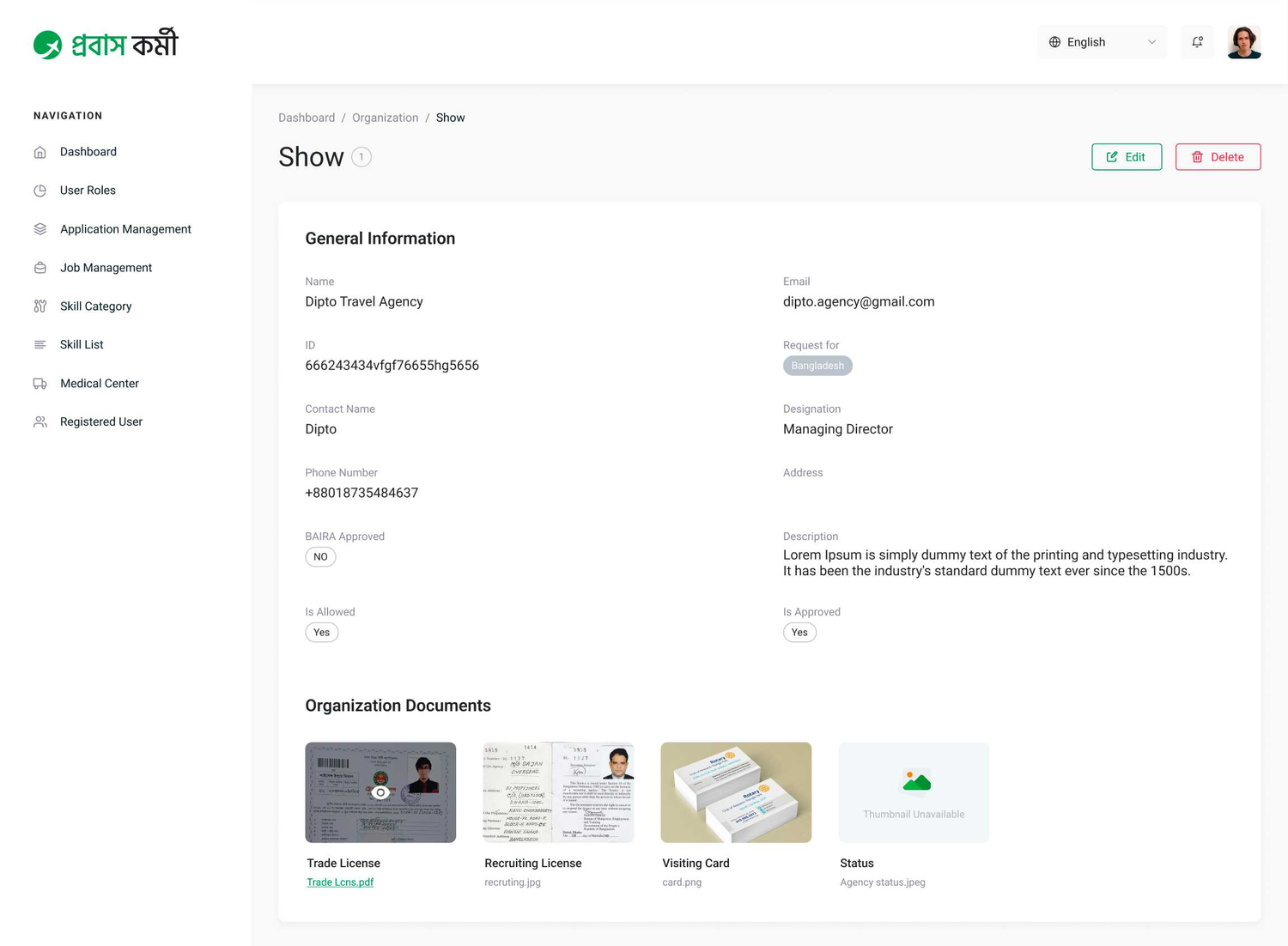
- Compliance-oriented management portal. The web side that keeps the mobile ecosystem inside the rules the business is bound by.
What an advisory seat actually is
Here I was the person the internal teams argued architecture and design with, not the person merging the pull requests. That means making the case for a structure before it is built, pushing back on decisions that would be expensive later, and then verifying the UI and UX against what was agreed.
It is a smaller role than lead engineer and worth naming as such — but on a regulated, multi-surface product for a vulnerable user group, the review seat is where a lot of the damage gets prevented.
By the numbers.
Probash Kormi — applicant app and management portal
The Bangla-first applicant experience and the admin side that keeps the ecosystem compliant — designed as one system rather than an app with a back office attached.
Applicant app — Bangla-first job search and agency lookup, with application tracking that carries medical and trade-test documents on the record.
If we worked together.
I bring high-leverage product engineering and absolute operational discipline: shipping weekly, pressure-testing user inputs, and automating delivery pipelines.
Olympic Combat
Olympic Combat teaches martial arts to kids in Dubai, and its growth depends on one flow: a parent finds the school, books a free trial, and turns up. That funnel already existed when ELO inherited it from the London agency that built it — along with a two-page handover document that was, in substance, a list of links to the Vercel, Firebase, Google Cloud and Bitbucket docs. No environment manifest, no account inventory, no data shapes, no cutover plan. We reconstructed what the system actually did from the code, kept shipping the bookings and calendar work, and moved the whole estate onto the client's own accounts — 2,605 lead records included. The client's job was to grant access and attach cards; everything else stayed on our side of the line.