
Jamahook
Jamahook AG is a Zürich-based music-tech company and a direct ELO client for over 6 years — the world's first AI-powered music matching ecosystem, launched in October 2020, with a desktop agent, VST/AU/AAX plugins, and a web portal. Producers find complementary material through acoustic and psychoacoustic audio annotation and analysis, on an algorithm developed in collaboration with Fraunhofer IDMT — the institute behind MP3. I created the first web product and admin panel from a blank canvas, then stood up the full-stack team (React + Node/NestJS on an NX monorepo) and stayed hands-on through the first market release. The dedicated team I helped build still ships modern integrations; since 2023 my seat has been primarily client and business relationship. Loopcloud acquired Jamahook in 2026, and the matching engine now powers Loopcloud's AI sound matching.
Blank canvas to market
Jamahook started as a greenfield bet in Zürich: no existing product surface, only the problem of helping producers find and match musical loops fast enough to stay in flow. I designed and built the first customer-facing web app and internal admin panel — loop matching and discovery driven by weights extracted from an AI model, not a hand-curated catalogue alone.
That 0→1 phase was fully hands-on: product shape, React front end, NestJS APIs, and the admin workflows the ops team needed to keep the catalogue honest as usage grew.
Team, monorepo, and compliance at scale
- Team stand-up after initial success — once the product proved itself in market, I hired and directed the full-stack pod under ELO, with a deliberate split between frontend (React + Storybook) and Node/NestJS integration work.
- NX monorepo — consolidated web, shared libraries, and admin tooling so multiple engineers could ship without fragmenting the codebase.
- OAuth2 login — standard OAuth authentication for producers signing into the loop-matching platform, alongside the Stripe/GDPR checkout flow below.
- Stripe + GDPR/VAT — checkout, tax, and EU compliance baked into product flows for 15,000+ active users, not bolted on after the fact.
- AWS Lambda admin panels + S3 Glacier — internal tooling on serverless compute and cold storage for massive audio archives.
- Commercial modules in the web portal — payment-enabled subscriptions and licensing, content ownership, vouchers, referral, and affiliate-marketer management, all in the product rather than in spreadsheets beside it.
The ecosystem the product became
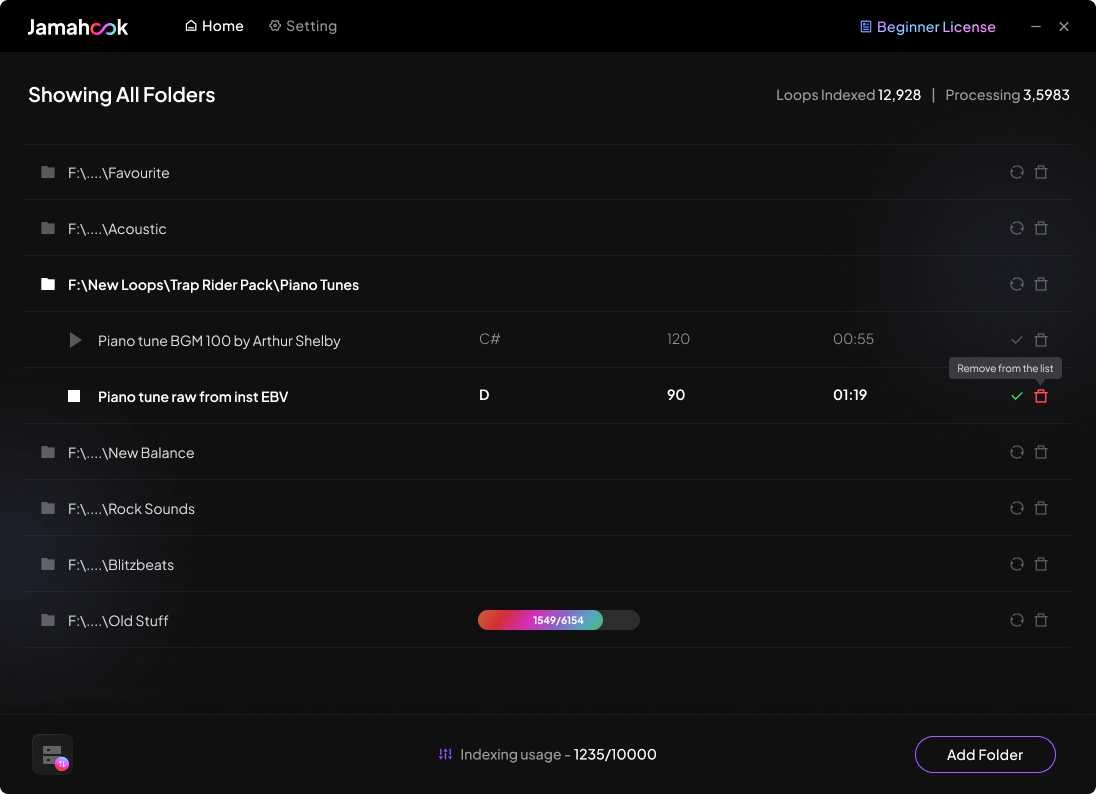
- Desktop agent with offline matching — a local audio file manager that indexes a producer’s own drive, generating audio metadata and signatures so matching works against their library, not only the cloud catalogue.
- DAW plugins — VST/AU/AAX surfaces so matching happens inside the session, where the creative decision is actually made.
- Plugin server ecosystem — built to scale with usage rather than provisioned for a peak, since plugin sessions arrive in bursts.
- B2B annotation & match recommendation API — developed and maintained as a product in its own right, which is what let the engine be embedded elsewhere later.
- Fraunhofer IDMT collaboration — the acoustic / psychoacoustic annotation and analysis algorithm was developed with the institute behind MP3.
Six-plus years on — and acquisition
As a direct ELO client in Zürich for over 6 years, the product outgrew the first web-only vision: today it ships as a web app, a DAW plugin, and a desktop application, each with enriched features accumulated over that engagement.
Loopcloud acquired Jamahook in 2026; the dedicated engineering team I helped assemble continues to power Loopcloud’s AI sound matching with that engine.
My role shifted naturally with maturity — hands-on through the early build and team formation, then primarily client and business relationship from 2023 onward while the team owned day-to-day delivery.
By the numbers.
Jamahook — Web Portal, DAW Plugin & Desktop Agent
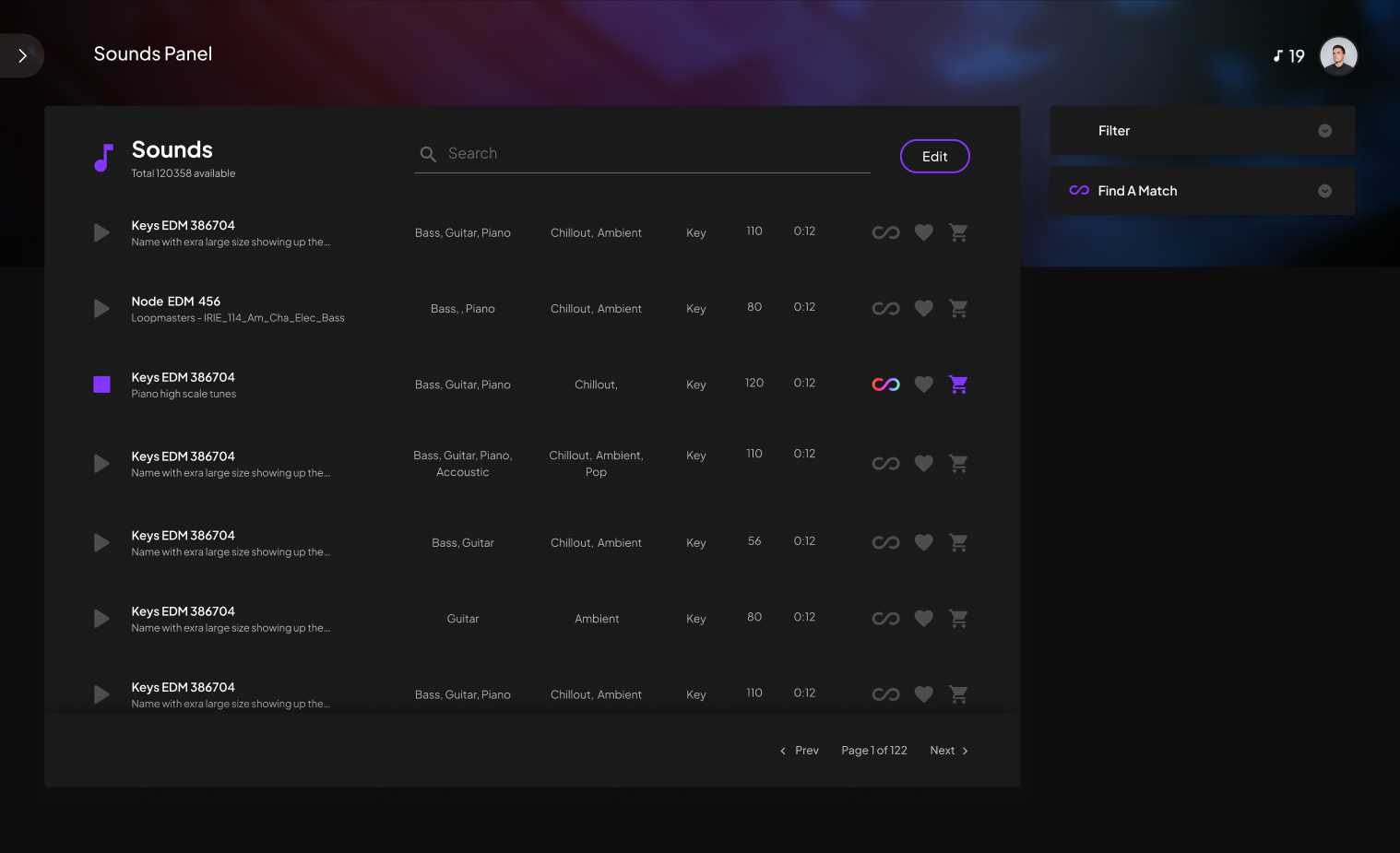
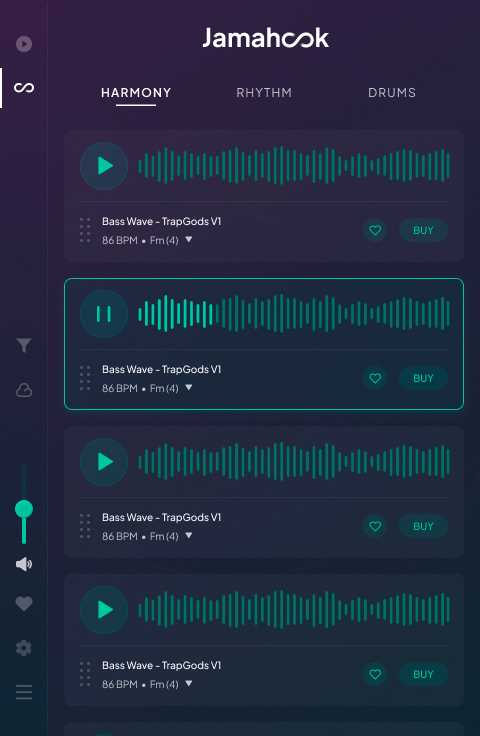
The three surfaces of the matching ecosystem: the web portal’s sounds panel with Find A Match, the in-session plugin with harmony / rhythm / drums matching, and the desktop agent indexing a producer’s own drive for offline matching.
Web portal — Sounds Panel: catalogue browsing with per-loop key, BPM and duration, plus Find A Match against the selected sound.
If we worked together.
I bring high-leverage product engineering and absolute operational discipline: shipping weekly, pressure-testing user inputs, and automating delivery pipelines.
See it in the wild.
This case study covers how Jamahook was built — these links open what ships today: the live product, repo, demos, and supporting material.
Anygum
Anygum is a working marketplace-style platform where anyone can host their own API and builders can compose bespoke apps that pull services from multiple vendors. Identity runs through Cloudsight — custom auth on Auth0 — so provider and consumer context share single sign-on, RBAC and org controls, multi-instance of the same app for different teams, easy telemetry, and a single payment funnel for consumption. Ideation started as an internal auth problem for SaaS distribution; it was spun out as Anygum. Elobooks.net uses it. Distribution limited wider market reach; the product itself works.